
Architecture : Cave Rock Cut Architecture
Rock cut architecture occupies a very important place in the history of Indian Architecture. The rock-cut architecture differs from traditional buildings in many ways. The rock-cut architecture is a type of Rock Art in which a structure is created by carving it out of solid natural rock. The rock-cut art is more similar to sculpture than architecture as structures were produced by cutting out solid rocks. Indian rock-cut architecture is more diverse and abundant than any other type of rock building seen around the world (more than 1,500 rock-cut structures in India). The cave architecture in India is believed to have begun during the ancient time.
1. Importance of Cave Architecture as a Source of History
Caves were patronized by kings across country Barbara caves by Ashoka, Ellora caves by Rashtrakutas and Badami by Chalukyas
The brilliance in cutting technique illustrate considerable accomplishment with regard to structural engineering Eg Kalishnath Cave temple uses unique cut-out technique while most of the monolithic structures use cut in monolithic techniquethis . Shows the grandess of technological achievemnt to pull off such a masterpiece. It is perhaps seen as the epitome of what a man can achieve. .Bhaja and Karle were at famous trade routes in western Ghats which used to connect sea port to interiors.
With detailed carvings, sculptures, and paintings, these caves offer insights into the religious, social, and artistic aspects of ancient times.
The cave architecture in India is believed to have begun during the ancient time. These caves were used by Buddhist and Jain monks as places of worship and dwelling.
The relics, motifs, murals and sculptures of the caves enlighten us about the achievements in Art and culture Some caves were also used as Education centres like Kanheri caves were biggest education center in Western India. Environment Conservation: Water resources are prevalent at Kanheri which shows water harvesting was practiced at caves
2. Types of cave Architecture in India and its Structural Design
Cave architecture in India evolved from natural caves to elaborate rock-cut structures, reflecting the country’s diverse culture and history. Caves carved out of stone cliffs served as dwellings, places of meditation and worship. Indian cave temples reflect the country’s religious diversity and the different traditions used in caves in unique ways. Buddhist cave architecture is broadly classified into two primary types: the Chaitya and the Vihara . The main features of them are
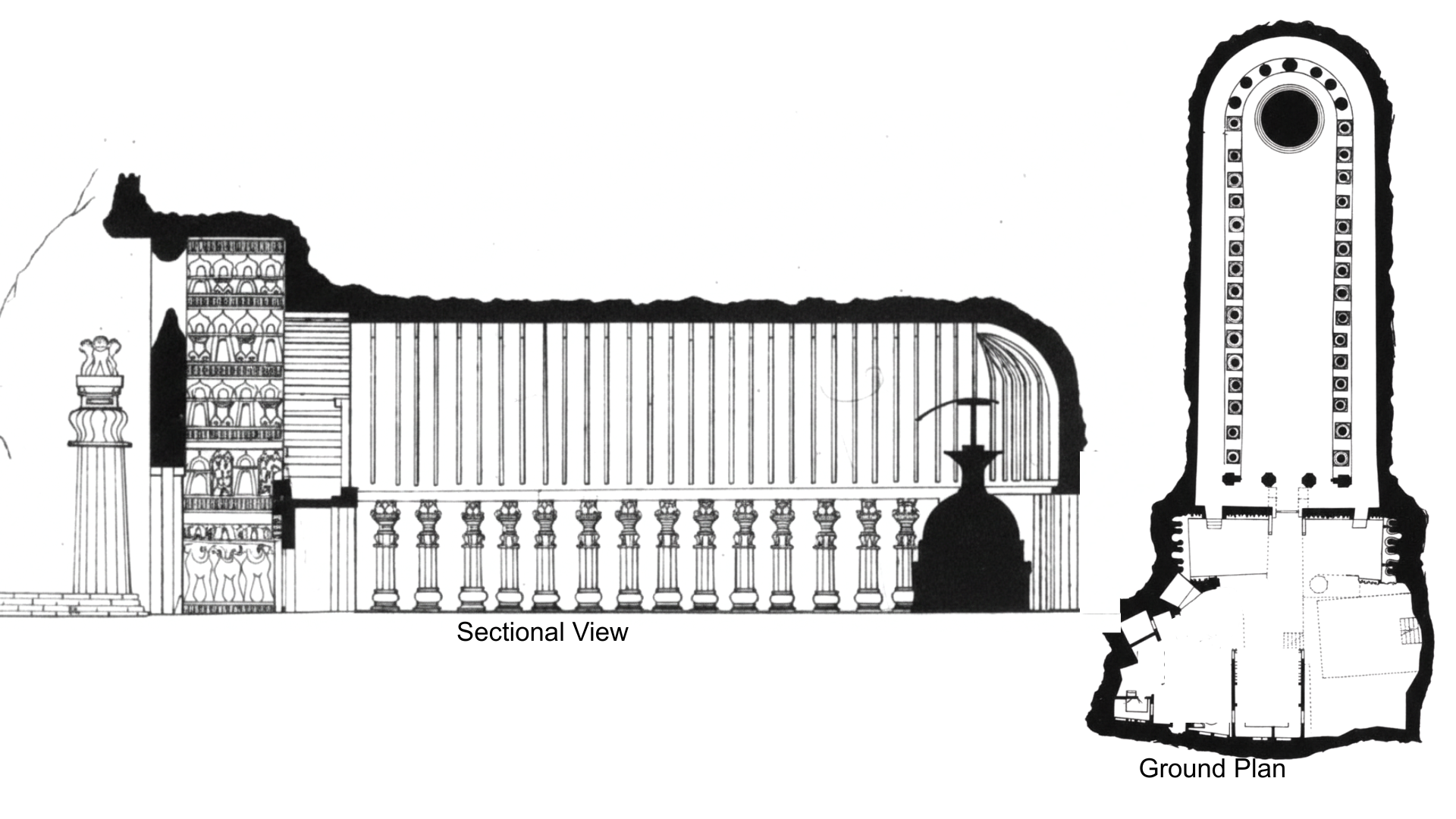
| Primary Function | A place of worship or prayer hall, often a sanctuary housing a stupa |
| Central Element | A rock-cut ↗Stupais typically located at the rear or apse end, serving as the focal point of veneration. Apart from the main stupa it also features carvings, Buddha figures and ↗Sculpturesdepicting religious scenes |
| Architectural Layout | Generally features a ↗Rectangular Hall with an apsidal ↗Semi cicular end and ↗Two Rows of Pillarsforming an aisle around the stupa (ambulatory path) . |
| Focus | Communal worship, circumambulation (pradakshina) of the stupa |
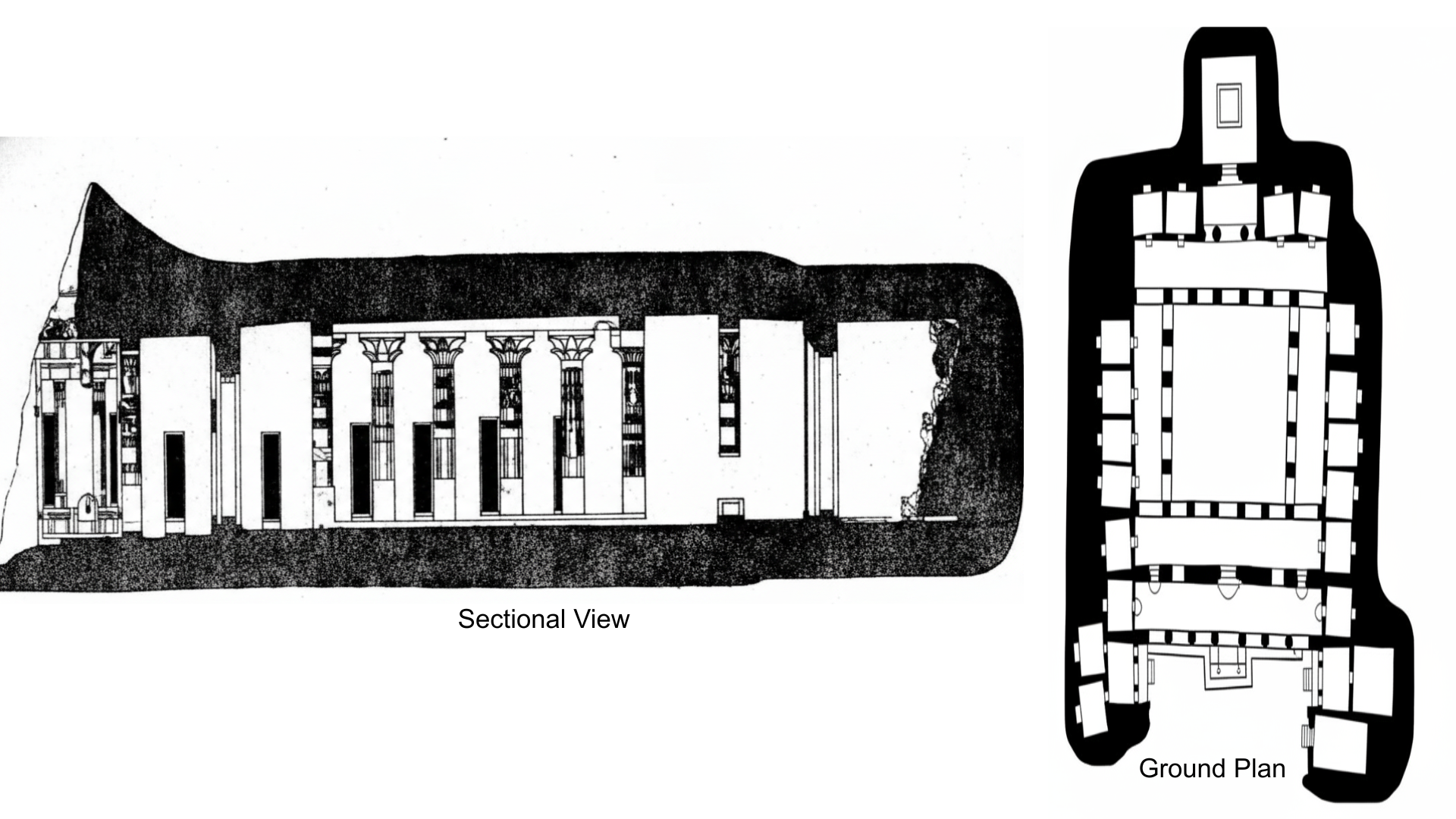
| Primary Function | A residential complex for Buddhist monks to live, study, and meditate during the monsoon season |
| Central Element | ↗Cells arranged around a central ↗pillared or hall are the main feature |
| Architectural Layout | Usually square or rectangular in shape, with a ↗central open areasurrounded by monks’ cells and a squares, ↗inner cell at the far end of a central hal |
| Focus | Private dwelling, monastic life, and individual meditation or study |
2.2 Important Cave Architecture in India Dynasty wise
Indus Valley Public buildings can be classified into four specific types (public gathering, granaries, water management, and factories)
The Mauryan dynasty, from 4th century BCE to 2nd century BCE, and particularly under the leadership of emperor Ashoka, witnessed the construction of some of the earliest rock-cut caves in the country. These cave structures played a significant role in religious, artistic, and practical aspects of the society.
Barabar Complex
The Barabar Hill Caves are the oldest surviving rock-cut caves in India, dating from the Maurya Empire (322–185 BCE), some with Ashokan inscriptions, located in the Makhdumpur region of Jehanabad district, Bihar, 24 km (15 mi) north of Gaya. Functioned as residences (viharas) and assembly halls (chaityas) for monks . Notable Caves in his Complex are
Lomas Rishi Cave
Located on the southern side of the Barabar hills.📌
It is the earliest surviving example of the horseshoe-shaped Chandrashala or Chaitya Arch which ↗mimicks , which has long been a popular feature of Indian sculpture and rock-cut building.
The Lomas Rishi cave features an iconic arched facade with a row of ⛶Elephants walking towards stupa emblem. The ⛶motif of makara (Crocodile) has been carved prominently on either end of the torana
The Interior features a rectangular-shaped antechamber entered from the side, with a short tunnel connecting to the ⛶inner room . Similar to other Caves it has an Arched Roof and Polished Interiors
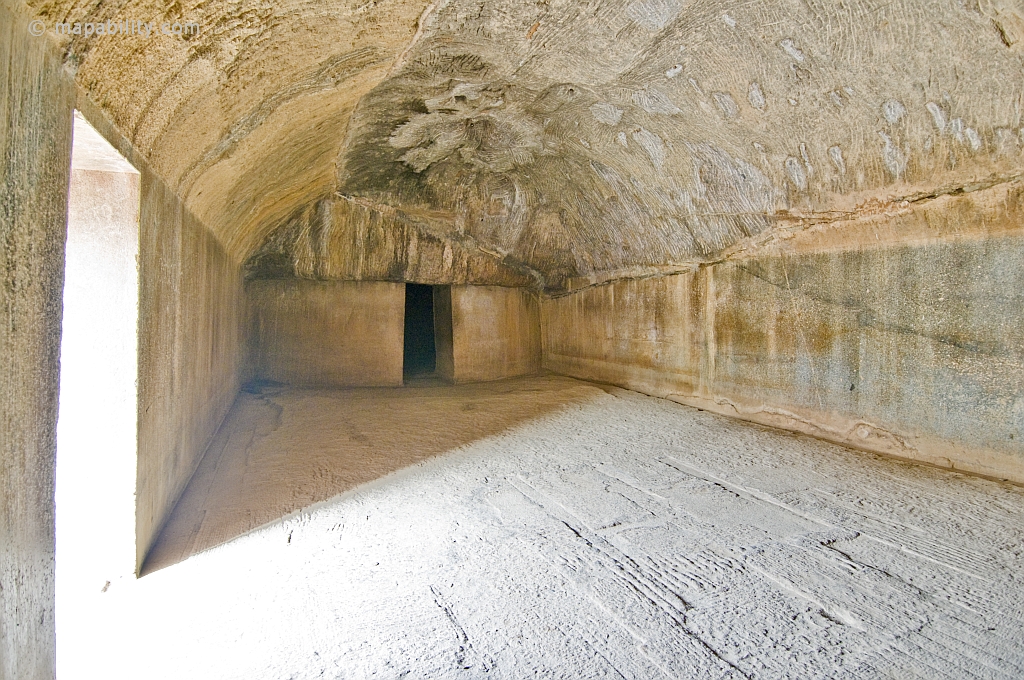
Lomas Rishi Cave was excavated and given to the Ajivikas monks during the time of Mauryan ruler Ashoka.
The Lomas Rishi Cave does not have any Ashoka inscriptions. Instead Inscription a ↗Hindu ruler of the Maukhari dynasty, dedicated a statue of Krishna to the cave, according to a Sanskrit inscription on the arch.
Sudama Cave

Sudama cave is located on the left of the Lomas Rishi cave
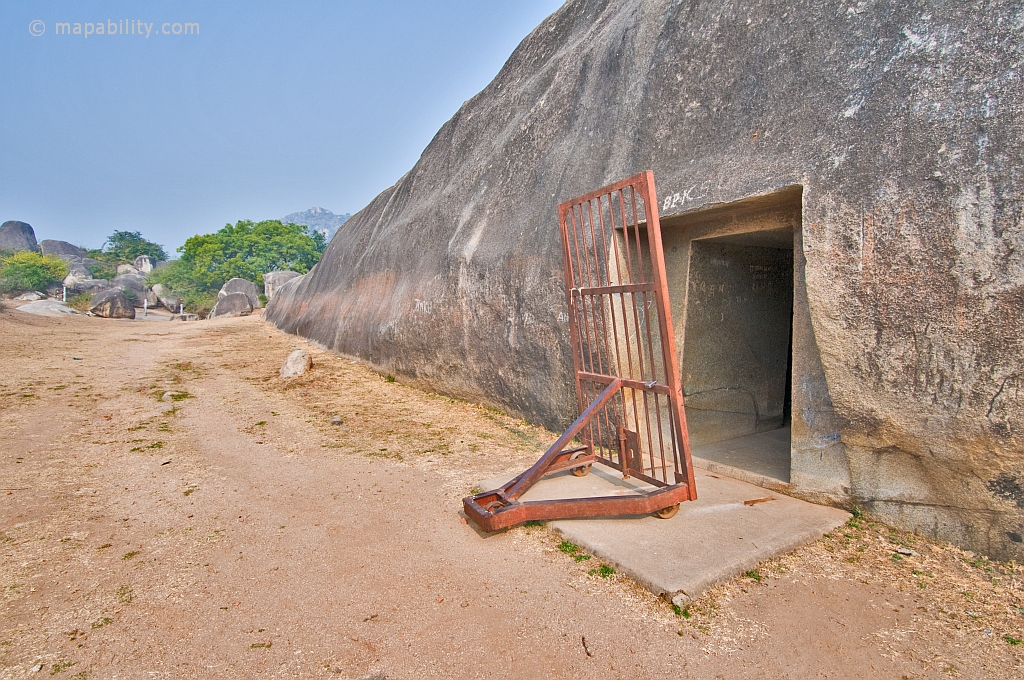
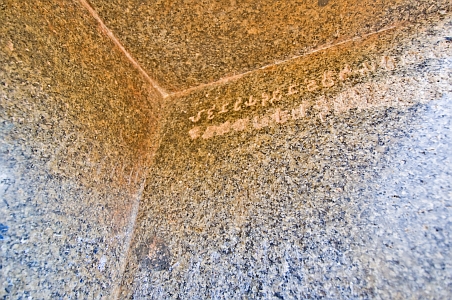
Sudama cave, according to an inscription placed near its entrance, was perhaps the first cave dug in the Barabar cave group. Emperor Ashoka donated Sudama cave to the Ajivikas, as shown by an ⛶Incription in Brahmi inscribed in the cave’s entrance employing his ⓣprotocol name
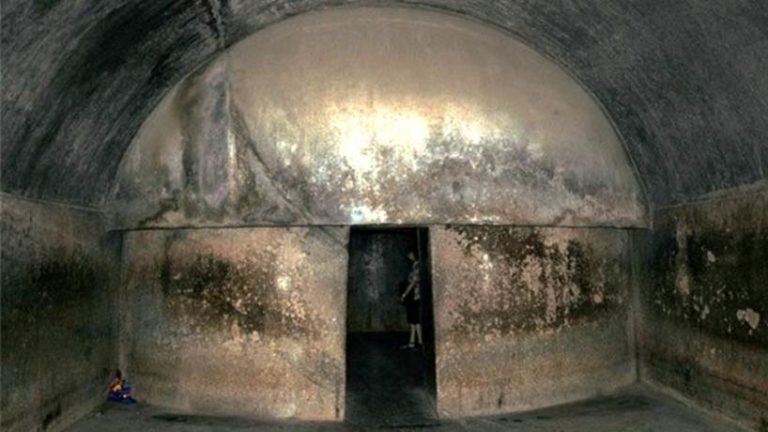
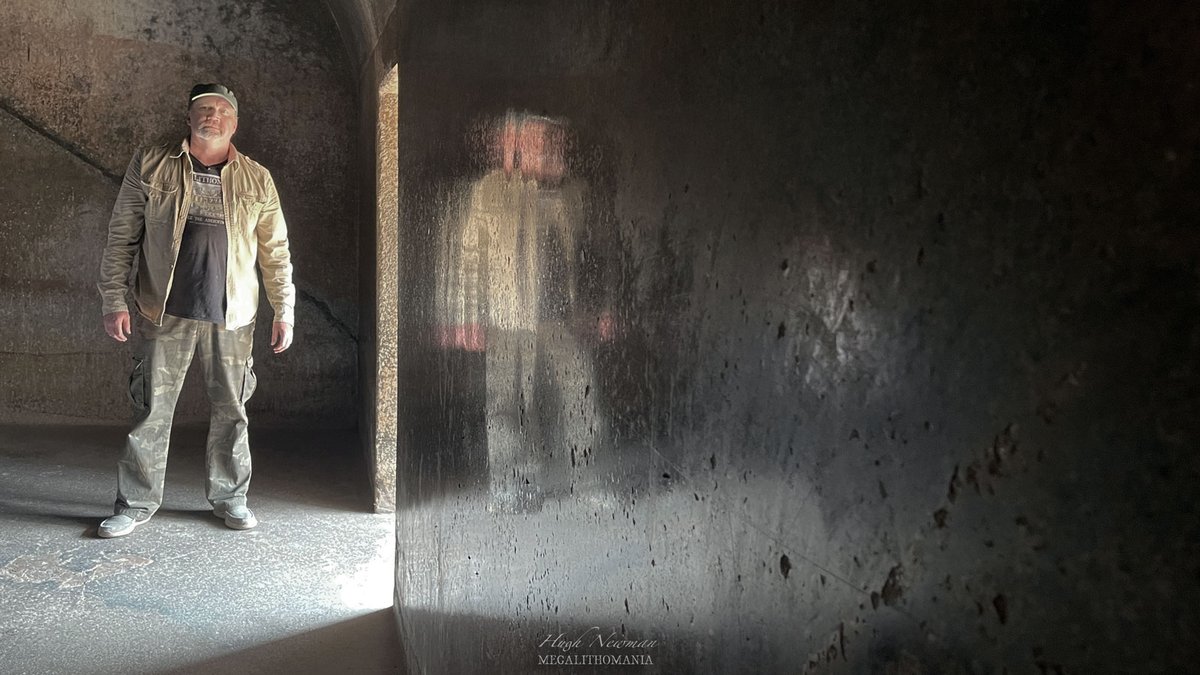
The Sudama cave has an arched roof. It has a vaulted circular room within which is a rectangular mandap. Similar to Lomas Rishi it also feature a similar ⛶inner Room
Sudama caverns’ interior walls are an engineering marvel. The extremely flat and polished granite surface provides a ⛶mirror image . Highly symmetrical with echo-inducing acoustics.
Karan Chaupar
It has an Ashoka inscription dated the 19th year of his reign on it.
The Buddhist practice of ⓣVassavasa during the monsoons is described in an inscription found at the cave’s entrance.An inscription from the Gupta dynasty in the entry chamber says ⓣDaridra Kantara The inverted ⛶swastika at the conclusion of the inscription shows that this cave, one of the four Barabar Caves, was ⓣreserved for

A mound near the entrance is also covered with later ↗Buddhist sculpture, indicating that the cave once belonged to Buddhists.
At one end of the cave is a rock-cut seat. It is made out of a single rectangular room with gleaming surfaces.
Vishwakarma Cave

Vishwakarma Cave, has an almost square entrance like other Barabar caves, is made up of two rectangular rooms. The room is completely open to the exterior, like an extended porch.
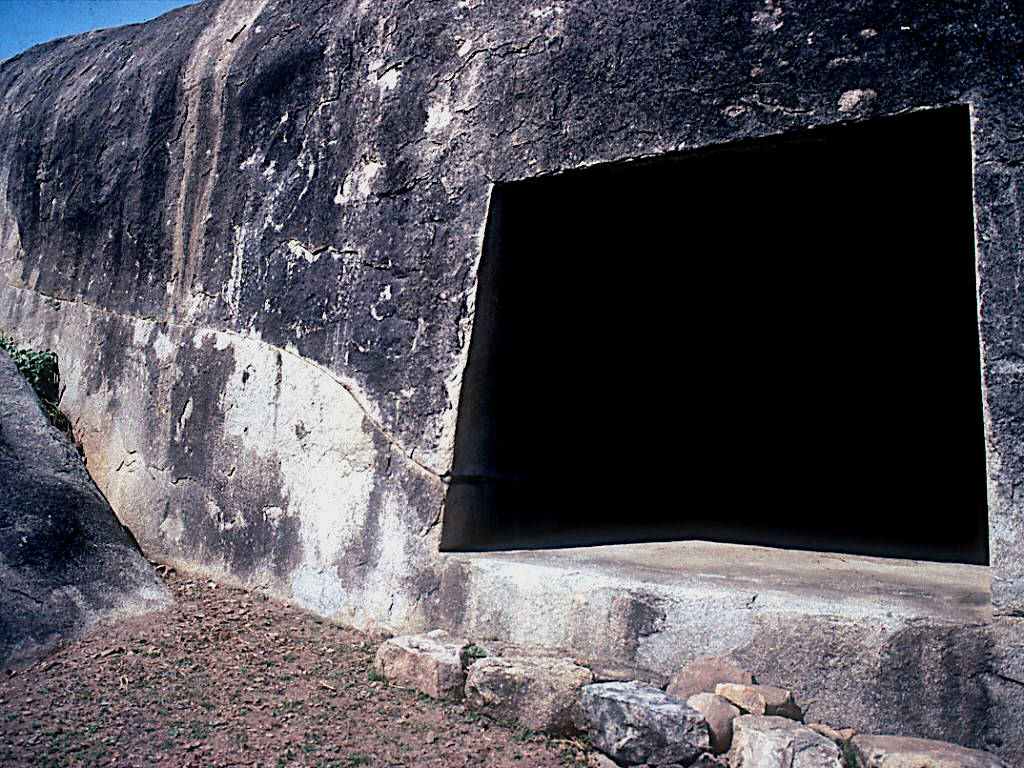
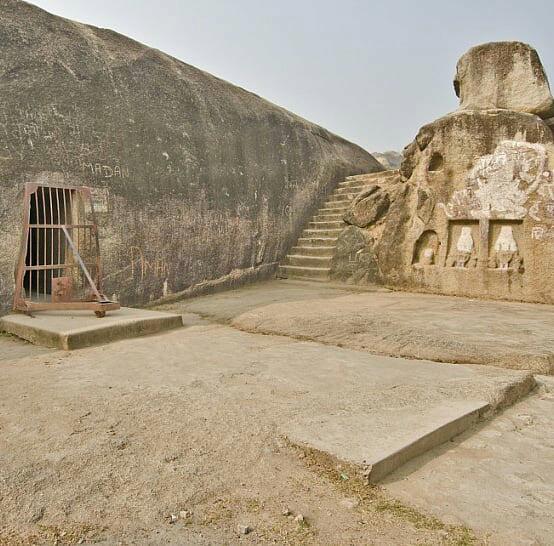
The ⛶Ashoka Steps built into the cliff provide access to this cave. During Ashoka’s 12th year of reign, he offered Vishwakarma cave to Ajivikas.
It’s the only cave in the series that doesn’t have any inscriptions from after the Asoka period. Emperor Ashoka dedicated Vishwakarma cave in 260 BC, and 7 years later, he dedicated Karan Chaupar cave, which is a short distance from Vishwakarma cave.
Nagarjuni Complex
There are three caves excavated in the Nagarjuna Hills – the Vadathi-ka-Kubha (Vedathika Kubha), the Vapiya-ka-Kubha (Mirza Mandi), and the Gopi-ka-Kubha. The Nagarjuni Caves were ⓣdedicated by , the grandson and successor of Emperor Ashoka, to the Ajivika sect,
Gopiya Caves

📌Gopi (Gopi-ka-Kubha, milkmaid) is a cave reached by stepping up a flight of megalithic steps. It has got the largest chamber in the group. The cave contains several important ⛶inscriptions , some of these testify that son of Ashoka – Dasaratha (reigned in 232 – 224 BC) – has devoted these caves to Ajivika – thus these structures might be some 50 years younger than caves at Barabar.
Vapiya and Vadathi
North of the Gopi (Nagarjuna) Cave, there is the ↗Vapiya-ka-Kubha (or Vapiya Cave), also known as the Mirza Mandi cave, which is located near a dry well. The third cave in the Nagarjuni Hill group, the ↗Vadathi-ka-Kubha (or Vadathi Cave), is also located on the north side of the hill, accessible through a natural crevice.
Indus Valley Civilization granaries were large, sophisticated structures , built on raised platforms with ventilation systems to store surplus grains (wheat, barley) and protect them from floods and pests, crucial for food security and trade
Satvahana Caves
Note While Most Caves are associated with Satvahanas, Many have no known date, but inscriptions mentioning donors and specific king names have aided in their identification. Many have also been donation-funded, or “crowdfunded,” caves.
Ajanta Caves (1st Phase / Hinayana Phase)
The first phase of Ajanta caves was also started by satvahanas Caves 9, 10, 12, 13 and 15A attributed to Satvahan Kings this phase is often known as the Hinayana phase, Buddhist art (before 1st century CE) depicted the ⓣBuddha through . In this phase more, the focus was given on stupa and figurative sculpture were limited.

Chaityas

Cave 9 – It is a large Worship Hall , with monolithic stone stupa carved from a living rock. Note there ar no Idols here

Cave 10 – Worship Hall with a stupa and circumambulatory path. Though this cave majorly belongs to the Hinayana phase, the cave was worked upon in the Mahayana era too. This is explained by presence of Buddha’s images and idols that belong to the later era. figures like ⛶Bodhisattvas and Jataka tales
Viharas
Cave 12 is a Hinayana vihara which was excavated in the 2nd century BC and it is probably one of the earliest excavations at Ajanta. . It has 12 cells and each cell having two stone-beds. The skillfully carved sleeping berths in the cells. An inscription on the back wall of the monastery records the gift of this cave by one ⓣmerchant
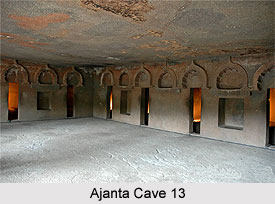
Cave 13 is an incomplete vihara belongs to Hinayana phase of Buddhism.
Cave 15A is the smallest of all the excavations at Ajanta. This cave consists of a small central astylar hall with one cell on three sides.
Note – The later-identified caves have been suffixed with the letters of the alphabet, such as 15A, identified between originally numbered caves 15 and 16. The cave numbering is a convention of convenience, and does not reflect the chronological order of their construction.
Pithalkhora Caves

The Pitalkhora Caves located in the 📌of the Western Ghats of Maharashtra, are an ancient Buddhist site consisting of 14 rock-cut cave monuments which date back to the third century BCE, making them one of the earliest examples of rock-cut architecture in India.The caves are in two groups, one of 10 caves and the second of four. Out of the 14, ↗Five are chaityas (one housing votive stupas, one apsidal and single-cell) and the rest ↗Nine are viharas.
The caves are cut in a variety of basalt rock, but some of the caves have crumbled and are damaged.All the caves belong to the Early Buddhist schools period, but the reasonably well preserved paintings are of the Mahayana period.
It is believed that Pitalkhora can be identified with Ptolemy’s chronicles as well as Buddhist Chronicals of Mahamayuri ⓣwhich are respectively

Cave 4 which is a Vihara shows ↗statues of arranged in processional rows, two ↗soilders of which one is intact, a damaged Gaja Lakshmi icon, and an ancient rainwater harvesting system. These caves have been significant in helping establish the chronology of cave building in the Ajanta-Ellora region.
Kondana Caves

The Kondana Caves are located in the small village of Kondana, 33 km north of Lonavala and 16 km northwest of Karla Caves
This cave group has 16 Buddhist caves. The caves were excavated in first century B.C. The construction on wooden pattern is notable.
The cave only one inscription on the front of the Chaitya, which gives information about donors.
Bhaja Caves
Bhaja Caves is a group of 22 rock-cut caves dating back to the 2nd century BC located in the city of Pune.
It belongs to the Early Buddhist schools in Maharashtra. The caves have a number of stupas, one of their significant features.The Bhaja Caves share architectural design with the Karla Caves.
The most prominent excavation is its chaitya (or chaityagrha – Cave XII), a good example of the early development of this form from wooden architecture, with a vaulted ↗Ceiling.The hall is surrounded by pillars which are ↗in number, with wooden beams affixed to the ceilings.. The most unique characteristic of the caves is that the beam of light of the setting sun enters the insides of the caves.
Another notable part of the monument is a group of ⛶14 Stupas .Five of the 14 stupas are inside the smaller cave, while the other nine are outside. Two of the 14 stupas feature a relic box on their upper side (also called a harmika)
Simple rock-cut Viharas termed dwelling rooms and water Cisterns can be found throughout the Bhaja cave Buddhist complex. An Important vihara (Cave XVIII) has a pillared verandah in front and is adorned with unique reliefs. . They are thought to contain the relics of monks who lived and died in the Bhaja caves.
The vihars are ornamented with unique reliefs and have pillared verandahs in front. There are several animal representations and inscriptions of Buddhist monks’ names, as well as some Buddha paintings. Exquisite ↗headdresses, garlands, and jewelryadorn the sculptures in the Bhaja Buddhist grotto. The carvings prove that ↗Tabla – a percussion instrument – was used in India for at least two thousand years. The carving shows a woman playing tabla and another woman, ↗Performing
Near the last cave, there is a spectacular waterfall, the water of which flows into a little lake at the bottom during the monsoon season.
The Archaeological Survey of India – ASI has designated the inscriptions and cave temple as a Monument of National Importance.
Bedse Caves
Bedse Caves (also known as Bedsa Caves) are a group of Buddhist rock-cut monuments situated in Maval taluka, Pune District, Maharashtra, India.
The history of the caves can be traced back to the Satavahana period in the 1st century BCE. They are some 9 km from the Bhaja Caves. Other caves in the area are Karla Caves, Patan Buddhist Cave and Nasik Caves.Architecturally, they form a stylistic bridge between the simpler Bhaja Caves (2nd century BCE) and the more ornate Karla Caves (1st century CE).

There are two main caves. The best known cave is the chaitya (prayer hall – Cave 7) with a comparatively large stupa, The Bedsa Chaitya closely resembles the earlier Bhaja Caves and anticipates the grander Karla Chaitya, which was excavated a few decades later.It features a long, apsidal (horseshoe-shaped) plan with a vaulted roof supported by 36 octagonal columns
The other important cave is the monastery or vihara (Cave 11).The pillars in the Chaitya hall are distinguished by their carved capitals showing pairs of ⛶lions and elephants, symbolising royal power and spiritual strength.The hall contains nine small cells cut into the walls, each serving as a monk’s chamber with stone benches. True to the aniconic phase of Buddhism, the Buddha is not depicted in human form. They are marked by a profusion of decorative gavaksha or ⛶chaitya arch motifs
The Bedsa caves contain Brahmi inscriptions recording donations by individuals such as Maha Seṭhi Bhuta and Mitra Sethi (merchant donors).
Karle Caves
From the first century CE until the fifth and sixth centuries CE, these caverns were excavated.With only 15 caves, Karla Caves is one of India’s most prominent Buddhist rock-cut cave sites.
Pillars with Capitals

The largest Hinayana Buddhist chaitya (temple) in India is Karla Cave. The main Chaityagriha is one of India’s largest. Architecturally, sculpturally, and inscriptionally, it is significant. The Great Chaitya (Cave no. 8) at Karla is India’s largest rock-cut chaitya, spanning 45 meters (148 feet) long and rising to a height of 14 meters (46 feet). The Grand Chaitya includes gigantic 15 pillars (square stepped plinth) with unique ↗Scuptures.After the 5th century CE, many Buddha and Bodhisattva sculptures were carved in the verandah. Karla’s sculptures represent new trends in Indian art – more plasticity, with figures that are approximately 60% free of the wall behind them. Sculptures are refined, with clothing folds, earrings, and so on.
There is also a Impresssive stupa in the center which shows almost all elements like ↗Vedika,↗Medhi,↗Anda,↗Harmika,↗Yasti and Chatriof a Stupa. Karla Caves are distinguished by large horseshoe-shaped windows that illuminate the interiors and vaulted ceilings.
There are two 15-meter-high pillars outside the Chaitya, but only one of them survives now. It resembles Ashoka’s pillars, featuring ⛶Lion Capital , . At the main Chaitya gate, there is a temple dedicated to a local goddess (A shrine of goddess Ekvira).
In contrast to some other cave temples, the ceiling in Karla Cave No. 12 is ↗made of rather than stone ribs.This woodwork (chhatri) is one-of-a-kind; the wood was cut 2,000 years ago and has been well preserved, with no signs of corrosion. The shrine – stupa with an umbrella over it – is located at the far end of Chaitya.
On the pillars in the hall, there are some vestiges of paintings from the 5th and 6th centuries CE.
Many of the pillars in the hall include inscriptions in Brahmi script and Prakrit language that list the names of the contributors and their origins. The caves were built with the help of several tradesmen and Satavahana monarchs. Long inscriptions written by royal families from the first to second century CE can also be found.
Kanheri Caves

Kanheri Caves are a collection of more than 100 Buddhist caves nestled among the tranquil surroundings of Mumbai’s Sanjay Gandhi National Park in Borivali. Kanheri, also known as Krishnagiri or Kanhagiri in ancient inscriptions, literally ⓣmeans and is named after a black basaltic stone.
The patronage of the Kanheri caves may be traced back to the Kushan , Satvahan and Mauryan dynasties, which reigned from the 2nd to 9th centuries BC. These caverns were later influenced by Gupta art. The spectacular Elephanta caves have also been impacted by the Kanheri caves.
By 1560, Buddhism had been gradually lost in Maharashtra, leading to the caves’ abandonment. They remained in a dilapidated state for 300 to 400 years. Following India’s independence, the Archeological Survey of India decided to take over, revitalise, and conserve the heritage site.
Kanheri is home to both Chaityas and Viharas. The elements of wooden construction were kept in mind while creating them. The caves are the only location in western India with artistic evidence of all ⓣthree Vehicles of Buddhism .In Kanheri, Buddhist monks lived, studied, meditated, and spread the teachings of Gautama Buddha in 109 caves. During the monsoon, the caves were also used as shelters.The Kanheri caves contain the earliest images of the Buddha in South India, and they became famous around the world after Chinese ⓣmonk travelervisited the monastery and is said to have brought a wooden image of Bodhisattva Avalokiteshvara to China, as well as numerous Sanskrit Buddhist manuscripts. .
Cave No. 3 – At Kanheri, this cave has the most intact carvings. It also has a prayer hall known as the Chaitya Gruha. The prayer hall appears majestic, with intricately carved Buddhist sculptures — including slender figurines with arched eyebrows and delicate fingers and Stupas (dome-shaped shrines). It has a hall with 34 pillars and two large standing Buddha sculptures. It contains hints on the Theravada (Hinayana) Buddhist sect.The Kanheri Caves feature a colossal Buddha statue (22 feet tall). While podhis (water cisterns) are found near almost all of the 109 caves, specific, large, working water tanks (cisterns) are prominently ⛶Located here
Cave No. 11 – This cave is very similar to cave number five in Ellora, Aurangabad. They are India’s only caves where Buddhist monks have hosted group recitations of religious scriptures.To do their diurnal practice, they sat around elongated ⛶14 rectangular tables cut out of the cave’s rock. The tables have survived to this day. The monks in the caves maintained close contact with the monks in China via the Silk Route, an ancient international highway that aided in the spread of Buddha’s teachings throughout Asia.
Cave No. 41 – This cave is home to the ⛶11-headed god Avalokiteshwara, who represents the compassion of all Buddhas. This is India’s first and only archaeological piece of this deity, as well as the world’s earliest recorded piece.
Cave No. 90 – It is the oldest cave and the only one with two ⓣ inscriptions engraved in its verandah. It is also the world’s first structure dedicated to housing the ⛶ Lotus Sutra— the Buddhist teaching as told by Gautam Budhha near the end of his life.
Cave No 11 – The inscription regarding ⓣ Satavahana ruler marriage to King Rudradaman I’s daughter is also notable.
The Magathane caves (6 km west of Kanheri caves) are known for the exquisite Makara decoration in the main cave, which is now decrepit. Some of the sculptures discovered in Magathane caves date from the 6th century CE.
Nashik Caves / Pandavleni Caves

Pandavleni Caves, also known as Trirashmi Caves, are ancient rock-cut caves located on the Trirashmi hill. These are a collection of ancient Hinayana Buddhist caves (B.C.250- A.D.600).These caves were carved between the 1st and 3rd centuries BCE, with additional sculptures added up until the 6th century, reflecting changes in Buddhist devotional practices. Nasik caves are another name for them. Captain James Delamaine first documented the Trirashmi Buddhist caves complex in 1823, and it is now an ASI-protected site.The Kshatrapas, Satavahanas, and Abhirs – the three Kings who previously governed Nashik – are depicted in these caverns.Following the decline of Buddhism, the site was occupied by Jains. Even during the medieval period, Jain monasteries were most likely still present.
The caves were called Pundru which in Pali language means “yellow ochre color”. This is because the caves were the residence of Buddhist monks who wore “the chivara or the yellow robes”.Over time, the name “Pundru” evolved into “Pandu Caves” and then the popular misnomer “Pandavleni” (meaning Pandava Caves in Marathi), as locals mistakenly associated the caves with the Pandava brothers from the Hindu epic Mahabharata.
In ancient times, these viharas served as monasteries where people could meet and discuss with monks, while the vihara also served as a prayer hall for Buddhist monks and disciples of Gautam Buddha.In June 2021, a research team from the Archeological Survey of India discovered three new caves in the Nasik caves complex near the Trirashmi hills.
The Pandavleni Caves are made up of 24 carved cave temples known as viharas. The Chaitya is one (Cave 18) of the 24 carved cave temples. Cave No. 18 which is the Chaitya (prayer hall), has a gorgeous Stupa; ⛶Pillars are one-of-a-kind because they have inscriptions written vertically on them.
The Caves which stand out among the Vihara caves are:
Cave No. 3 is one of the most interesting, as it is lavishly decorated. It is the largest and most important Vihara (monastic residence) in the Pandavleni complex. There are six massive ⛶dwarves (doors). Cave No. 3, also known as Devi Leni or The Queen Mother’s was excavated in honor of ⓣGautamiputra Satakarni’s motherwho had financed its construction and gave it to the Sangha
Cave no. 10 “Nahapana Vihara“, is complete in both structural and inscription details.
Cave No. 11 at this site is dedicated to Lord Vrishabhanath (Rishabhanatha), ⓣthe first
Cave No.17, “Yavana vihara” , is a significant piece of evidence for the ⓣpresence of in Western India, was built by a devotee , who presents his father as being a Yavana from the northern city of Demetriapolis.
Cave No.19 has one inscription of ⓣKing of the Satavahanas, which is the oldest known Satavahana inscription, dated to 100-70 BCE
Junagarh Caves
Junagadh Buddhist Cave Groups are located in Junagadh district of the Indian state of Gujarat. These caves group includes Uparkot Caves, Khapra Kodiya Caves and Baba Pyare Caves. The so-called “Buddhist Caves” are not actually caves, but three separate sites of rooms carved out of stone to be used as monks’ quarters. These caves were carved starting from Emperor Ashoka’s period up to 1st–4th century AD and feature Satavahana-influenced architecture with carved pillars, water tanks, and monks’ cells

Uparkot Caves are located These caves located at Uperkot on the eastern side of Junagadh, close to Adi Kadi Vav, were carved in 2nd–3rd century A.D. These caves have influence of Satavahana architecture with combination of Graeco-Scythian style.

The oldest of the Lot, the Khapara Kodia Caves, on the basis of scribbles and short cursive letters on the wall, are dated to 3rd-4th century BC during the Emperor Ashoka’s rule and are plainest of all cave groups. These caves are also known as Khangar Mahal.They were carved into living rock during the reign of Emperor Ashoka and are considered the earliest monastic settlement in the area. These caves are along the edge of the ancient Sudarshan Lake and little outside Uparkot fort, Northerly.They are carved out in an east–west longitudinal ridge. Caves are small in area. But, it has unique architecture of the water tanks design on western side and ‘L’ shaped residence.

The Bava Pyara Caves are located near Modhimath, little outside Uparkot fort complex, southernly. These are much more intact than the Khapara Kodia caves. The caves were constructed during the Satavahana regime in 1st–2nd century A.D. According to the Xuanzang’s travel account they were constructed in 1st century A.D. Bava Pyara caves contains artworks of both Buddhism and Jainism
Mahakali Caves

The Mahakali Caves, also known as the Kondivita Caves, are a collection of 19 rock-cut Buddhist caves (4 caves on the southeastern face and 15 caves on the northwestern face) dating from the first century BCE to the sixth century CE. Mahakali Caves are a few kilometers away from Paspauli. According to the inscription, a person from Paspauli donated the Vihara at Mahakali. This Buddhist monastery may be found in the Andheri neighborhood of Mumbai (Bombay) in western India. Caves are carved out of a solid black basalt rock,(volcanic trap breccias, prone to weathering).
The northwest group of caves dates from the 4th to 5th centuries, although the south-eastern group is older. These rock-cut caves have existed since the ancient Ashoka Empire, and Buddhist monks used them as dwellings and meditation chambers as long as 2,000 years ago.
Chaitya, cave number nine, is a one-of-a-kind cave among the fifteen caverns. It is Kondivite’s largest cave, with seven depictions of Lord Buddha and other figures from Buddhist legend.
Junnar Caves

Junnar Caves (Lenyadri), are a series of about 26 rock-cut Buddhist caves, located about 4.8 kilometres (3.0 mi) north of Junnar in Pune district in the Indian state of Maharashtra. The current name “Lenyadri” literally means “mountain cave”. It is derived from ‘Lena’ in Marathi meaning “cave” and ‘adri’ in Sanskrit meaning “mountain” or “stone”.
The caves face to the south and are numbered serially from east to west. Caves 6 and 14 are chaitya-grihas (chapels), while the rest are viharas (dwellings for monks).
Cave 7 the most Important – originally a Buddhist vihara – was later converted into one of the Ashtavinayak shrines ⓣdedicated to as an infant. This thus became a ⛶cave temple and is today among the eight important Ganesha sites in Maharashtra. . In regional mythology, this is the Girijatmaja cave where goddess Parvati desired to be a mother and where Ganesha was born.The rest of the cells and the hall of Cave 7 remain in their original form
Naneghat Caves

Naneghat pass was one of the trade routes. It connected the Konkan coast communities with Deccan high plateau through Junnar. This was the most important trade route, as it connected harbour of Sopara and Kalyan directly to Junnar and Paithan. ⓣ______ found them while hiking during the summer of 1828.
Nane ⓣmeans and ghat means “pass“ The name is given because this path was used as a tollbooth to collect toll from traders crossing the hills. While going through Malshej Ghat, we can easily get a glimpse of Naneghat after Murbad.
The inscriptions are attributed to a queen of the Satavahana dynasty. Her name was ⓣeither , likely the wife of king Satakarni.
Kalinga Kings
The Udayagiri-Khandagiri caves represent a major early, decorated, and architecturally significant contribution by the independent Kalinga state. They were made under the Kalinga King Kharavela in 1st-2nd century BC near modern-day Bhubaneswar
Udaigiri Caves
The Udayagiri hills are on the right-hand side as the visitor approaches from Bhubaneswar. Compared to Khandagiri, Udayagiri offers more beautiful and better maintained cave shrines. There are 18 caves in Udayagiri.
Rani Gumpha “Cave of the Queen” Rani Gumpha is the largest and most popular cave among the caves of Udayagiri and Khandagiri.
This cave is double storeyed. Each storey has three wings and the central wing is bigger among all the three wings. The lower floor has seven entrances in the middle wing whereas the upper floor has nine columns. The upper portion of the central wing has relief images depicting the victory march of a king. Many of the cells have carved dwara pala images; some of them are disfigured.
Mancapuri and Swargapuri Gumpha Mancapuri and Swargapuri Gumpha is double storeyed. Manchapuri cave depicts two male and two female figures worshipping the Kalinga Jina that Kharval brought back from Magadha. It has a damaged Jain religious symbol which was probably used for worship.
There are three inscriptions: one inscription talks about the chief queen of Kharavela, and the other two refer to Kudepasiri, the successor of Kharavela and Badukha, the son or brother of Kudepasiri.
Ganesha Gumpha The cave is named for the carved figure of Ganesha on the back of its right cell. Of course, it would have been carved in the later period and it cannot be the original work. The cave has two large statues of elephants ⛶carrying garlandsat the entrance and is the first example of sculpture animals used as a guard to the entrance. Also, the carved figures of dwara palas are found at the entrances. The carvings in this cave narrate the story of the elopement of Bassavadatta, Princess of Ujjayini, with King Udayana of Kausambi in the company of Vasantaka.
Vyaghra Gumpha is another popular caves in Udayagiri. The cave, which is in ruins, has an entrance carved like a ⛶tiger’s mouth, with the single-cell forming the tiger’s throat. It is one of the most photographed sites in Udayagiri. The word vyaghra means “tiger”. The inscription found here tells that this cave belongs to the city judge Sabhuti.
Hati Gumpha is a large natural cavern with an inscription by Kharavela which is the main source of information about him. The cave is known as Hati Gumpha due to its exquisite carvings of elephant. The word hati means “elephant”. The Hathigumpha cave (“Elephant Cave”) has the Hathigumpha inscription, written by Raja Kharavela, the king of Kalinga in India, during the 2nd century BCE. The Hathigumpha inscription consists of ⛶seventeen lines incised in deep cut Brahmi letters on the overhanging brow of a natural cavern It details the reign of King Kharavela of Kalinga (2nd/1st Century BCE), describing his military victories, public welfare projects, and patronage of Jainism in Prakrit language and Brahmi script.. The inscription also refers to the Kharaval’s feat of bringing back the status of Agra-Jina (transl. Rishabhanatha) which was taken by Nanda empire. It faces the rock edicts of Asoka at Dhauli, situated about six miles away.
Khandagiri Caves
The Khandagiri hills fall on your left side when you enter into this area from Bhubaneswar. There are 15 caves in Khandagiri. These caves were renovated during the reign of Uddyotakeshari of Somavamshi dynasty.
Ananta Gumpha: The cave has sculptures of women, elephants, geese, etc.
Navamuni Gumpha: Navamuni Gumpha is a roughly cut cell with the sculptures of nine Jain Tirthankaras and Sasana Devis. These sculptures were added to the caves in the 11th century by Somavamshi dynasty.
Trusula Gumpha: There are three sculptures of Rishabha Deva who is found in the Kayotsarga posture. Apart from these sculptures, there are sculptures of 24 Jain Tirthankaras which look rough.
Ambika Gumpha: There are three relief sculptures, two of Rishabhanatha and one Amra the sasana-devi of Neminatha.
Both Buddhist and Hindu caves were developed. Buddhist Cave architecture reached its zenith during this period. Buddha was depicted as a human through sculptures and images thus it was also known as Mahayana Phase. caves construction under the second phase was done during Gupta periods (in 5th and 6th century AD) under the rule of the Vaktaka King – Harisena
Ajanta Caves (2nd Phase / Mahayana Phase)
The 2nd Phase of Ajanta was developed during this period focusing on caves 1-8, 11, 14-29: 2 chaityas 19 & 26 and rest viharas. Hence the Total Chaityas here are 4 While Viharas are 25. Built in 5th-6th Century CE ( under Vakataka patronage, of King Harisena). There is Introduction of Buddha/Bodhisattva imagery, elaborate Viharas, and iconic paintings. At Ajanta, caves no. 16, 17, 18, and 19 were contemporary to the Gupta period. For instance, caves 16 and 17 were constructed during the reign of Varahadeva, a feudatory of the Vakataka ruler Harisena.
The caves of the second period the overwhelming majority of images represent the Buddha alone, or narrative scenes of his lives. The Buddha was represented in Human and these representations are found both on the facades and in the interior
Various important scuptures were found in these caves like
Cave 1: Seated Buddha in Dharmachakrapravartana mudra is notable sculpture. Represents the peak of the Sarnath School of sculpture. Symbolizes the ‘Turning of the Wheel of Law’ (First Sermon).Notable paintings include Padmapani and Vajrapani Bodhisattavas. Note: We will study about the paintings later as these are not Rock cute architecture!
Cave 2 at Ajanta has sculpture of Yaksha figures (Sankhanidhi and Padmanidhi) to the left and Hariti and her consort Pancika to the right
Cave 16: is the largest and certainly the finest and most interesting monastery (Vihara) of Ajanta from the perspective of art and architecture. Its colossal hall, ornate doors and windows, beautifully painted galleries, sculptures, ornamented pillars, cistern was the gift of Varahadeva a minister of Vakataka King Harisena (475-500 A.D.). A central hall is surrounded by 14 cells on three sides, and sanctum housing Buddha image is shown seated in
Cave 19: It is in excellent state of preservation and is considered as one of the most perfect specimens of the Buddhist art in India, datable to 5th century A.D. Total 17 pillars and at the centre of the Chaitya stands a globular stupa. This cave has only one entrance door. A sculptural form of Buddha offering begging bowl to his son Rahula and sculpture representing a Nagaraja and his wife, and the opposite site of this image, a porch which probably was place of rest for pilgrims.Buddha offering begging bowl to his son Rahula
Cave 26: depicts Mahaparinirvana of Buddha on the right aisle wall and ⛶assault of Mara during Buddha’s penance adorns the same wall. One of the most prominent and outstanding figures are of humanized serpents, a Nagaraja and Nagini with an attendant figure as finest sculptures in human forms. The Mahaparinirvana of the Buddha, with numerous musicians and sorrowful figures of his followers when he finally achieves release from the mortal world, is a profoundly moving scene.
Masterpieces of ancient Indian fresco/tempera art, depicting Jataka tales, Buddha’s life, daily life, and court scenes, notable for rich colors (no blue) and naturalism.
Udaigiri Caves
Udaigiri caves are located at Vidisha-MP.The Udayagiri Caves are twenty rock-cut caves near Vidisha, Madhya Pradesh from the early years of the 5th century CE. Udayagiri Caves are set in two low hills near Betwa River, on the banks of its tributary Bes River.
They contain some of the oldest surviving Hindu and Jain temples and iconography in India. They are the only site that can be verifiably associated with a Gupta period monarch from its inscriptions – Chandragupta II(c. 375-415) and Kumaragupta I (c. 415-55).
One of India’s most important archaeological sites, the Udayagiri hills and its caves are protected monuments managed by the Archaeological Survey of India.
Udayagiri caves contain iconography of Jainism. They are notable for the ancient monumental relief sculpture of Parshvanatha in his incarnation.
The Udayagiri Caves complex consists of twenty caves (19 Hindu Caves, and 1 Jaina Cave). The Famous Ones are
Cave 4: Shaivism and Shaktis Cave 4 was named the Vina cave by Cunningham. It presents both Shaiva and Shakti themes.The temple sanctum is dedicated to Shiva, with the sanctum containing an ⛶ekamukha linga, or a linga with a face carved on it. Outside its entrance, in what was a mandapa and now is eroded remnants of a courtyard are matrikas (mother goddesses), eroded likely because of weathering.
Cave 5 (Varaha Cave) Vaishnavism Cult – Shows the Iconic Varaha Sculpture rescuing the earth symbolically represented by Bhudevi clinging to the boar’s tusk as described in Hindu mythology is a salient feature of the place.
Cave 13: Vaishnavism Cult Cave 13 contains a large Anantasayana panel, which depicts a resting figure of Vishnu as Narayana. Below the leg of Vishnu are two men, one larger kneeling devotee in namaste posture, and another smaller standing figure behind him.
Bagh Caves
The Bagh caves are situated in the Dhar district of Madhya Pradesh, comprising nine caves dedicated to Buddhism.
These caves were carved between the 4th and 6th centuries CE. According to tradition, the caves were carved by the Buddhist monk Dataka and are renowned for their mural paintings.
Jogeshwari Caves
The Jogeshwari caves are located on the island of Salsette.
The Jogeshwari Caves are some of the earliest Hinduism cave temple sculptures located in the Mumbai suburb of Jogeshwari, India.
They belong to the Mahayana sect of Buddhism however Brahmanical Shrine is also represented here.
The cave dates back to the second half of the 8th century.
Mandapeshwar Caves
It is also known as Montperir Caves, located in Borivali, near Mumbai, and was built as a Brahmanical cave during the late Gupta dynasty.
It was later transformed into a Christian cave, however. Sculptures of Natraja, Sada Shiva, and Ardhanarishwara can be seen among the site’s ruins.
Above the cave precincts are the church and its graveyard.
During the post-Gupta period (roughly 600–1000 CE), rock-cut cave architecture was actively pursued in the Deccan and southern India by several dynasties, with the Rashtrakutas leading the way in the construction of the later Ellora and Elephanta caves.
Ellora Caves
Located at Sambhaji Nagar, district of MH. A total of 34 caves: These caves are divided into three distinct sections, reflecting the religious diversity of ancient India: 12 Buddhist caves, 17 Hindu caves, and 5 Jain caves. These caves were carved between 600-1000 CE. The ancient name of Ellora was Elapura.
1. The Buddhist Caves (Caves 1-12):
The Buddhist caves, located at the southern end of Ellora, are some of the oldest structures in the complex. These caves primarily served as viharas (monasteries) for monks, featuring living quarters, meditation halls, and exquisitely carved shrines.
Cave no.10 – Vishwakarma Cave (Carpenter’s Cave) is most Notable
A Bodhi tree is intricately carved behind the statue, highlighting its spiritual importance. Named after Vishwakarma, the divine architect, this cave is a significant Buddhist structure. Features a grand statue of Buddha seated in Dharmachakra Mudra .The caves feature carved images of various goddesses, including Tara, Khadiravani-Tara, Chunda, Vajradhatvishvari, Mahamayuri, Sujata, Pandara, and Bhrikuti.Caves 11 and 12 are ⓣtriple-storeyed (Teen tal)
The Hindu Caves (Caves 13-29)
The Hindu caves lie at the center of the Ellora complex and are famous for their elaborate depictions of Hindu mythology. These caves are characterized by their intricate carvings of gods, goddesses, and epic narratives from the Mahabharata and Ramayana. Unlike the Buddhist caves, the Hindu caves are not simple, functional structures; they are ambitious projects designed to represent the grandeur of Hindu beliefs. The Hindu caves were built in two phases during the Kalachuris period, from the mid-sixth to the end of the eighth centuries. Early in the sixth century, nine cave temples were discovered, followed by four more caves (caves 17–29). . The subsequent caves, 14, 15, and 16, were built during the Rashtrakuta period. The famous caves here are
Cave no 14 – Ravan ki Khai. It is considered to be primarily dedicated to Shiva, but also has panels of several goddesses (Shakti worship). Double-storeyed. Sculpture of Ravana shaking Mount Kailash is ⛶also present here similar to one at Cave 16. It also has images of Mahisasuramardini, Nataraja, Andhakasura, Saptamatrikas etc.
Cave no. 15 – is famously known as the Dasha Avatar temple, representing a fusion of Hindu and Buddhist architectural elements.Features a ⛶two-story temple with cells resembling Buddhist caves, along with a Hindu temple layout.The plan of the caves suggests that it started as a Buddhist Vihara but later finished as a Vishnu temple.
Upper Floor Reliefs: Depict the 10 avatars of Vishnu and other mythological scenes. Narasimha’s slaying of Hiranyakashipu, showcasing intricate craftsmanship and storytelling.

Cave no. 16 – The most famous cave of Ellora is cave no. 16 known as Kailash temple. It is the biggest Monolithic construction in the world and was commissioned by ⓣRashtrakuta king . The Kailasa temple, though monolithic, was carved after the model of the Dravidian style of freestanding temple architecture.
Here a famous sculpture of Ravana shaking Mount Kailash Depicts the story (Ravananugraha) where Ravana, angered by Nandi, tries to uproot Mount Kailash; Shiva presses it down with his toe, trapping Ravana.
Cave no. 21 – Rameshwar Lena Shaivite cave.Depicts the story of goddess ⛶Parvati’s Penace or Parvati’s pursuit of Shiva, Shiva and Parvati at ⛶Leisure/Dice Game , Parvati’s wedding to Shiva etc.Depicts Sapta Matrika, the seven mother goddesses of the Shakti tradition.
Cave 29 – also known as Dhumar Lena, is one of Ellora’s earliest and greatest excavations. The “Vale Ganga” a natural waterfall that was integrated into the monument, was the focal point of early Hindu temple construction in the cave.
Elephanta Caves
The ancient name of Elephanta was Gharapuri. It is located off the Mumbai coast. It was carved between 5th and 8th century CE. Out of 7 caves, 5 are dedicated towards Brahamanism and 2 are dedicated to Jainism. It is also a part of the UNESCO World Heritage Site. At Elephanta, we find beautiful images of: Trimurti; Maheshmurti; Ardhanarishwara, and Uma-Maheshwar.
Shivleni Caves
The Shivleni Caves (Shiva leni; Jogai Mandap; Hattikhana) in Ambajogai, Maharashtra, India are rock-cut cave monuments which date in King Udayaditya (reigned c. 1060–1087) from Paramara dynasty of Malwa.
The caves include sculptures of Hindu deities like Shiva, Saptamatrukas and Ganesha.
Shivleni Caves are situated hardly half a kilometer to the north-west of Yogeshvari Temple, along the banks of the Jayvanti river.
A local story claims that the monument is the wedding court of the jogaidevi, whose temple is situated nearby. It is said that the wedding was planned to take place in this mandap but could not take place for supernatural reasons, and the elephants and everything inside it turned to stone, hence the name ‘Jogai Mandap’.
Badami Caves
Baghalpur district, Karnataka
These caves were constructed during the Chalukyas of Vatapi or Badami. 6-7 Century CE.The Badami caves were dedicated to Brahminism and Jainism. We will study about them under Temple Archtecture
Mamallapuram cave temples
Phase 1: The first phase of Pallava architecture marks the initial period. These cave temples were known as Mandapas and chaityas. These caves were constructed by Mahendraverman-I who assumed the title Chaityakari. These caves are located at Mahendravadi and Pallavavaram (both are located in Tamil Nadu). The caves of the early stages are simple in character without much ornamentation. Pillars of the entrance are short and broad without any motive for Ornamentation.
Phase 2: The caves carved in the second stage are known as the Mamalla style (started by Narsimhavarman Mamalla) These caves are more elaborated as compared to previous ones. For example, more ornamentation; taller and narrower pillars with lion motives.
Dwarapalas can be found at the entrance of the main gates. Ratha temples were cut at Mahabalipuram during the reign of Narsimhavarman-I Mamalla.These rathas were monolithic, cut out of live rock (Live rock here refers to natural rock formations that have not been altered or moved) There are 5 rathas themed after Mahabharatha known as “Panch rathas”.
Another famous architectural evidence is the Mahabalipuram bas relief.It is the large rock holders depicting various gods and goddesses. Because of multiple themes, it is known as Descent of the Ganges” and “Arjuna`s Penance”.
UPSC Exams
UPSC CSE
UPSC CAPF
UPSC CDS
UPSC NDA
UPSC EPFO
UPSC CISF LDCE
State Upper PCS
UPPSC PCS
BPSC CCE
RPSC RAS
MPPSC (Madhya Pradesh) CCE
MPSC (Maharasthra) Rajyaseva
WBPSC WBCS
GPSC CCE
KPSC (Karnataka) KAS
APSC (Assam) CCE
View More
Defence
AFCAT
BSF SI
Indian Army Agniveer
Banking
IBPS PO
SBI PO
RBI Grade B
Cental Bank Of India Apprentice
IDBI Junior Assistant Manager
SSC
Police
Bihar Police SI
UP Police SI
Delhi Police Head Constable
Rajasthan Police SI
WB Police SI
Assam Police SI
Odisha Police SI
Railway
Other State Exams
Insurance
Regulatory Body